What Fire Damage Actually Does to a Structure
Fire damage does not stop with flames.
Heat alters materials.
Smoke penetrates porous surfaces.
Residue settles unevenly.
Some damage appears immediately.
Other damage surfaces later.
Over time, common secondary issues include:
These effects often emerge weeks or months later.
At that point, accountability becomes harder to establish.
Understanding this behavior reduces regret.
What Professionals Evaluate Before Acting
Experienced professionals do not rush to clean.
They slow the system first.
They evaluate:
-
Heat paths through the structure
-
Material compatibility with cleaning methods
-
Residue depth and migration
-
Documentation requirements for later review
-
Whether actions taken now limit future correction
Homeowners decide under emotional strain.
By contrast, professionals rely on delayed indicators and pattern recognition.
That difference explains why outcomes vary widely.
What Often Goes Wrong After the First 30 Days
During the first month, visible damage usually improves.
Debris clears.
Surfaces look restored.
Odors fade temporarily.
However, hidden residue often remains.
At this stage, problems include:
-
Odor returning intermittently
-
Residue bleeding through finishes
-
Cleaning methods failing under humidity changes
These issues do not signal new damage.
They signal incomplete resolution.
Fire Damage Repair and Restoration failures often appear here.
What Surfaces Six Months to Two Years Later
As time passes, secondary effects emerge more clearly.
Materials age differently.
Coatings break down.
Inspection questions arise during resale or refinancing.
At this stage:
-
Causation becomes disputed
-
Documentation gaps matter
-
Correction costs increase
This is the final failure window.
Decisions made under pressure during Fire Damage Repair and Restoration often surface here, detached from the original emergency.
Why Comparison Shopping Fails After Fires
Comparison works when conditions are stable.
Fire damage conditions are not.
Price-based evaluation rewards speed.
It penalizes assessment.
It ignores delayed failure behavior.
Volume-driven response systems amplify this risk.
They surface availability, not outcomes.
Fewer assumptions reduce error.
Structured evaluation protects long-term value.
For this reason, Fire Damage Repair and Restoration decisions benefit from restraint rather than urgency.
How Accountability Protects Homeowners After Fires
Accountability does not come from speed.
It comes from structure.
Effective systems include:
-
Defined assessment phases
-
Documentation before cleanup
-
Verification after treatment
-
Monitoring over time
-
Escalation when symptoms return
These mechanisms exist to prevent silent failure.
Accountability protects homeowners long after crews leave.
What This Page Does Not Do
This page does not recommend responders.
It does not promote emergency claims.
It does not rank services.
It does not encourage rapid commitment.
Instead, it explains:
-
Why fire damage decisions feel rushed
-
Why early pressure increases risk
-
How to slow the system without ignoring urgency
These constraints exist to reduce error.
How to Use This Site After a Fire
If you are dealing with fire damage, begin with understanding.
Review related sections on smoke, odor, and secondary damage.
Many fire issues connect to:
Each section builds context before decisions.
That structure exists to protect outcomes.
What This Page Is Designed to Do
This page exists to slow decisions.
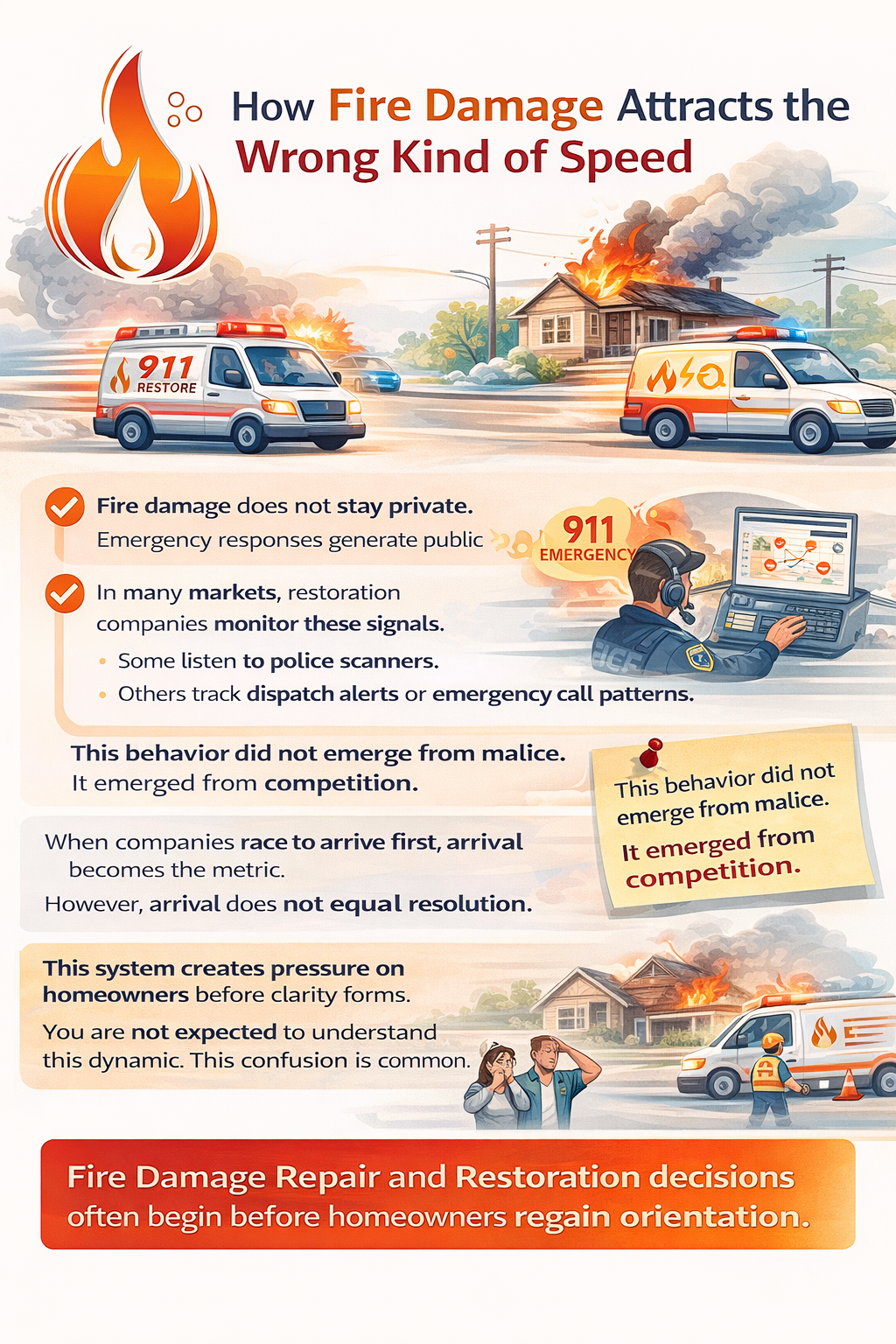
For this reason, it explains risk before urgency takes over.
As a result, it reduces regret.
If it helped you understand why fire damage attracts pressure, it worked.
If it clarified why speed can increase risk, it worked.
Fire Damage Repair and Restoration should be evaluated as a system problem, not an emergency transaction.
Understanding protects value.
Structure protects outcomes.
That is the purpose of Fire Damage Repair and Restoration decision guidance.