




Texas Slab Leak Damage Repair
Slab leaks create some of the most destructive hidden water damage conditions in Texas.
Most failures begin underneath the structure.
Water spreads below flooring systems.
Pressure changes develop beneath foundations.
Moisture migrates into framing, insulation, cabinetry, and finished materials before visible symptoms appear.
- Austin, Texas vs San Marcos, Texas — Slab Expansion Pressure vs Flash Flood Saturation
- Austin, Texas vs Columbus, Ohio — Heat Expansion Movement vs Midwest Freeze Saturation
- Austin, Texas vs San Antonio, Texas — Central Texas Expansion vs South Texas Heat Fatigue
- Austin, Texas vs Knoxville, Tennessee — Foundation Expansion vs Appalachian Moisture Retention
- Austin, Texas vs Norman, Oklahoma — Foundation Expansion vs Severe Weather Infrastructure Fatigue
- Austin, Texas vs Gainesville, Florida — Foundation Expansion vs Gulf Humidity Saturation
- Austin, Texas vs Oxford, Mississippi — Expansion Pressure vs Mississippi Flood Saturation
- Austin, Texas vs Starkville, Mississippi — Foundation Pressure vs Southern Moisture Stress
- Austin, Texas vs Columbia, Missouri — Heat Expansion vs Midwest Freeze Exposure
- Austin, Texas vs Baton Rouge, Louisiana — Slab Expansion vs Gulf Flood Saturation
- Austin, Texas vs Fayetteville, Arkansas — Heat Expansion vs Ozark Moisture Retention
- Austin, Texas vs College Station, Texas — Central Texas Expansion vs Brazos Valley Saturation
Many homeowners discover the problem only after structural conditions have already escalated.
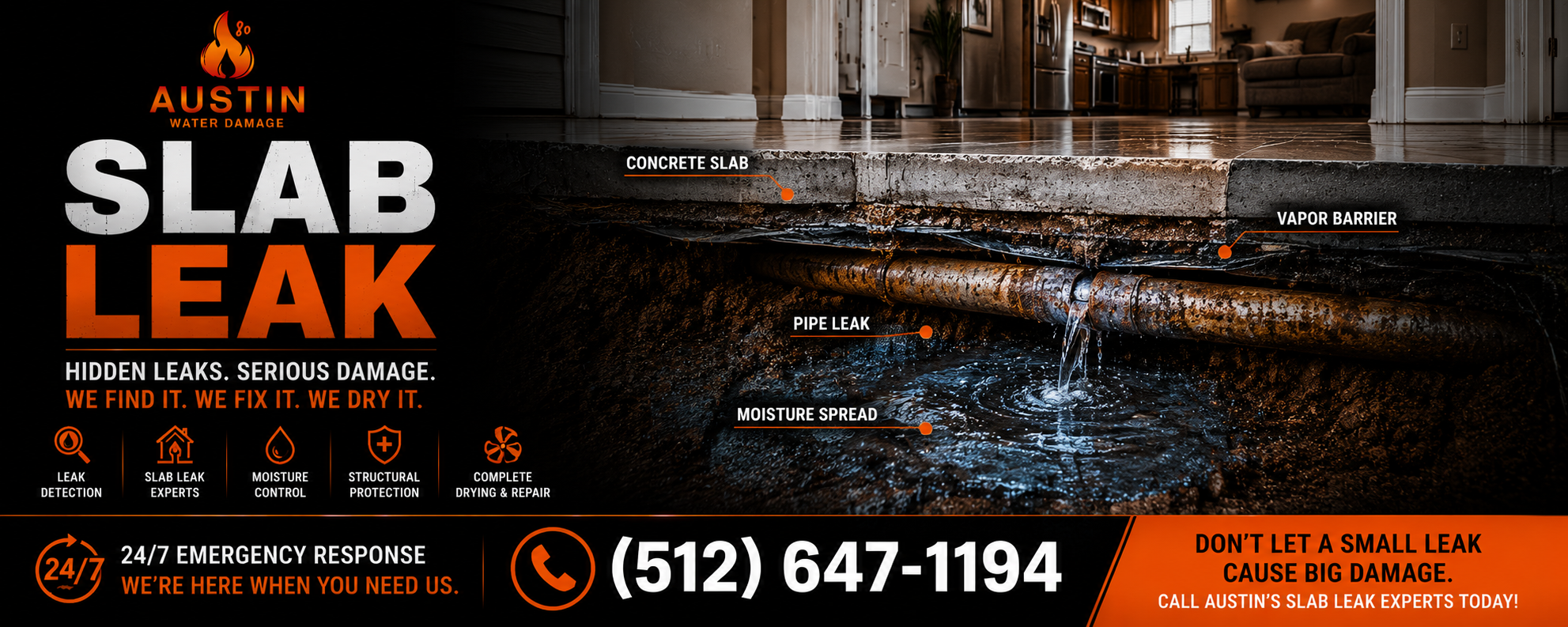
Texas environments accelerate this process through:
- expansive soil movement
- heat expansion cycling
- foundation stress
- plumbing pressure fluctuation
- rapid moisture migration beneath slab systems
Austin Water Damage approaches slab leak damage as a structural infrastructure event — not simply a plumbing repair.
Why Slab Leak Damage Is So Severe In Texas
Texas foundations operate under constant environmental pressure.
Large portions of the state rely on slab-on-grade construction installed directly over shifting soil systems.
When underground plumbing begins leaking:
- soil conditions change
- foundation support shifts
- moisture accumulates beneath flooring
- structural pressure redistributes across the slab
Small leaks often continue for weeks or months before discovery.
By the time visible symptoms appear, secondary damage may already exist inside surrounding systems.
Common Causes Of Texas Slab Leak Damage
Foundation Movement
Texas soils expand and contract aggressively during moisture shifts.
As slabs move:
- plumbing lines stress
- joints weaken
- underground fittings separate
- copper and PEX systems experience long-term strain
Movement changes plumbing behavior beneath the structure.

Heat Expansion Cycling
Texas heat places continuous expansion pressure on underground plumbing systems.
Repeated thermal cycling weakens:
- pipe joints
- fittings
- supply lines
- penetration points
- older copper systems
This becomes more severe during drought and high-temperature periods.
Water Chemistry Exposure
Certain Texas regions contain aggressive water chemistry conditions.
Over time this contributes to:
- pinhole leaks
- pipe wall thinning
- corrosion exposure
- underground line deterioration
Older plumbing systems become increasingly vulnerable beneath slab foundations.
Aging Plumbing Infrastructure
Many Texas homes still operate with aging underground plumbing systems.
As materials deteriorate:
- hidden leaks increase
- pressure inconsistencies develop
- moisture accumulates below flooring
- structural migration spreads farther from the original failure point

Signs Of Hidden Slab Leak Damage
Texas slab leaks often develop quietly.
Common warning signs include:
- unexplained flooring warmth
- elevated water bills
- moisture beneath flooring
- cracking tile
- foundation shifting
- musty odors
- low water pressure
- recurring moisture spots
- warped flooring
- unexplained humidity increases
Many homeowners initially misinterpret these symptoms as cosmetic issues instead of underground structural moisture exposure.
Slab Leak Damage Progression
Stage 1 — Underground Leak Formation
Water begins escaping beneath the slab.
Most conditions remain invisible at this stage.
Stage 2 — Soil Saturation & Foundation Pressure
Moisture changes soil density beneath the structure.
Support conditions begin shifting.
Stage 3 — Hidden Structural Migration
Water spreads into:
- flooring systems
- drywall
- insulation
- cabinetry
- framing cavities
Humidity levels rise inside the structure.

Stage 4 — Visible Structural Symptoms
Homeowners begin noticing:
- flooring movement
- cracking
- odor
- wall stress
- moisture staining
- cabinet distortion
The visible damage usually represents a much larger hidden condition underneath the property.
Austin Slab Leak Conditions
Central Texas creates unique slab leak exposure.
Austin properties commonly experience:
- expansive clay soil movement
- drought-to-storm moisture swings
- foundation elevation changes
- underground plumbing stress
- heat-driven expansion cycling
Hill Country runoff patterns also influence long-term slab stability across many neighborhoods.
These environmental conditions increase the likelihood of hidden plumbing migration beneath homes and commercial buildings throughout the Austin region.
Commercial Slab Leak Damage In Texas
Commercial slab leaks often escalate faster due to:
- larger plumbing networks
- operational water demand
- continuous occupancy
- complex HVAC systems
- multi-zone infrastructure layouts
Common commercial exposure includes:
- hotels
- multifamily buildings
- retail centers
- restaurants
- medical facilities
- office buildings
Underground moisture migration can impact multiple operational zones before discovery.
This increases both restoration complexity and business interruption risk.
Structural Drying After Slab Leak Damage
Surface drying alone is not enough.
Texas slab leak events frequently trap moisture inside:
- subfloor systems
- framing cavities
- flooring materials
- insulation layers
- wall assemblies
Incomplete drying may lead to:
- microbial growth
- flooring failure
- odor retention
- structural deterioration
- recurring humidity conditions
Verification matters more than appearance.
Organized moisture mapping and containment systems reduce long-term structural risk.
Slab Leak Water Damage And Mold Risk
Hidden slab moisture creates ideal microbial conditions.
Texas humidity accelerates mold exposure when moisture remains trapped beneath:
- wood flooring
- cabinetry
- drywall
- insulation
- baseboards
Many mold conditions begin underneath finished materials before visible growth appears.
This is why structural drying and environmental control must occur together.
Slab Leak Damage And Foundation Stability
Long-term underground leaks change structural conditions beneath the property.
Over time this may contribute to:
- slab settlement
- tile cracking
- wall separation
- floor instability
- structural stress redistribution
Water damage and foundation movement frequently operate together inside Texas slab leak environments.
Texas Slab Leak Infrastructure Intelligence
A slab leak is rarely just a pipe problem.
Most events involve:
- environmental pressure
- hidden migration
- structural moisture retention
- foundation stress
- infrastructure instability
Texas properties operate under some of the most aggressive slab conditions in the country.
Understanding how those systems interact helps reduce long-term structural risk.
Austin Water Damage approaches slab leak damage through organized infrastructure evaluation, moisture verification, and structural recovery strategy rather than surface-level restoration alone.
