Texas Water Damage Infrastructure Intelligence
Texas properties experience pressure differently than most regions in America.
Heat expands materials.
Storm systems overload drainage.
Rapid development stresses infrastructure.
Foundation movement changes structural behavior beneath homes and commercial buildings.
At the same time, Texas contains multiple environmental zones operating under completely different moisture conditions.
- Austin, Texas vs San Marcos, Texas — Slab Expansion Pressure vs Flash Flood Saturation
- Austin, Texas vs Columbus, Ohio — Heat Expansion Movement vs Midwest Freeze Saturation
- Austin, Texas vs San Antonio, Texas — Central Texas Expansion vs South Texas Heat Fatigue
- Austin, Texas vs Knoxville, Tennessee — Foundation Expansion vs Appalachian Moisture Retention
- Austin, Texas vs Norman, Oklahoma — Foundation Expansion vs Severe Weather Infrastructure Fatigue
- Austin, Texas vs Gainesville, Florida — Foundation Expansion vs Gulf Humidity Saturation
- Austin, Texas vs Oxford, Mississippi — Expansion Pressure vs Mississippi Flood Saturation
- Austin, Texas vs Starkville, Mississippi — Foundation Pressure vs Southern Moisture Stress
- Austin, Texas vs Columbia, Missouri — Heat Expansion vs Midwest Freeze Exposure
- Austin, Texas vs Baton Rouge, Louisiana — Slab Expansion vs Gulf Flood Saturation
- Austin, Texas vs Fayetteville, Arkansas — Heat Expansion vs Ozark Moisture Retention
- Austin, Texas vs College Station, Texas — Central Texas Expansion vs Brazos Valley Saturation
Austin faces slab movement and expansion pressure.
Houston operates under saturation and humidity exposure.
Dallas–Fort Worth experiences freeze events layered onto rapid growth infrastructure.
San Antonio combines aging plumbing systems with heavy seasonal runoff patterns.
This creates a restoration environment where water damage behaves differently across the state.
Texas Water Damage Restoration Under Structural Pressure
Water damage in Texas rarely remains localized.
Small failures often escalate through:
- slab foundations
- insulation cavities
- attic systems
- subfloor assemblies
- HVAC distribution
- hidden framing channels
Modern buildings trap moisture longer than older construction.
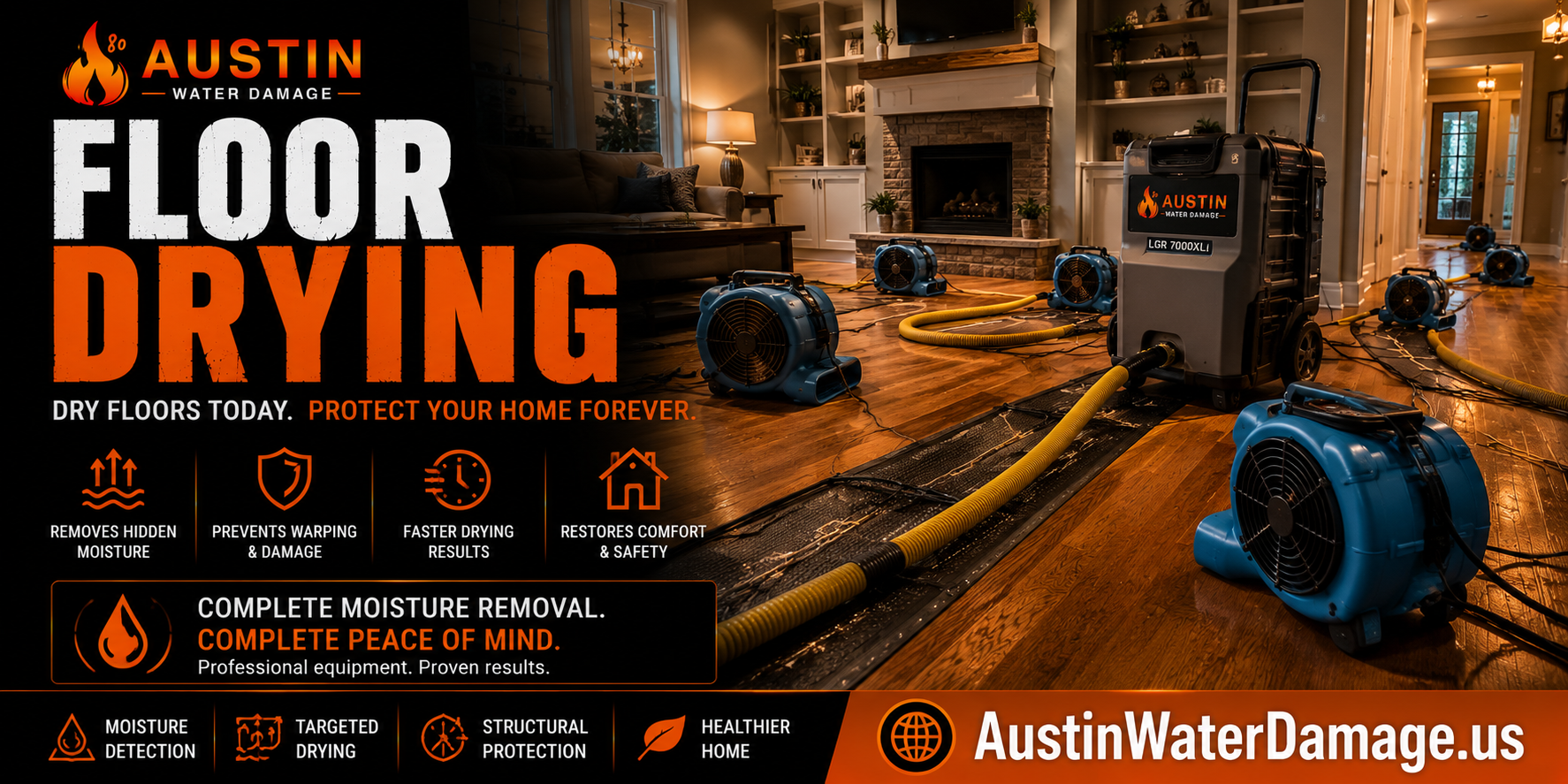
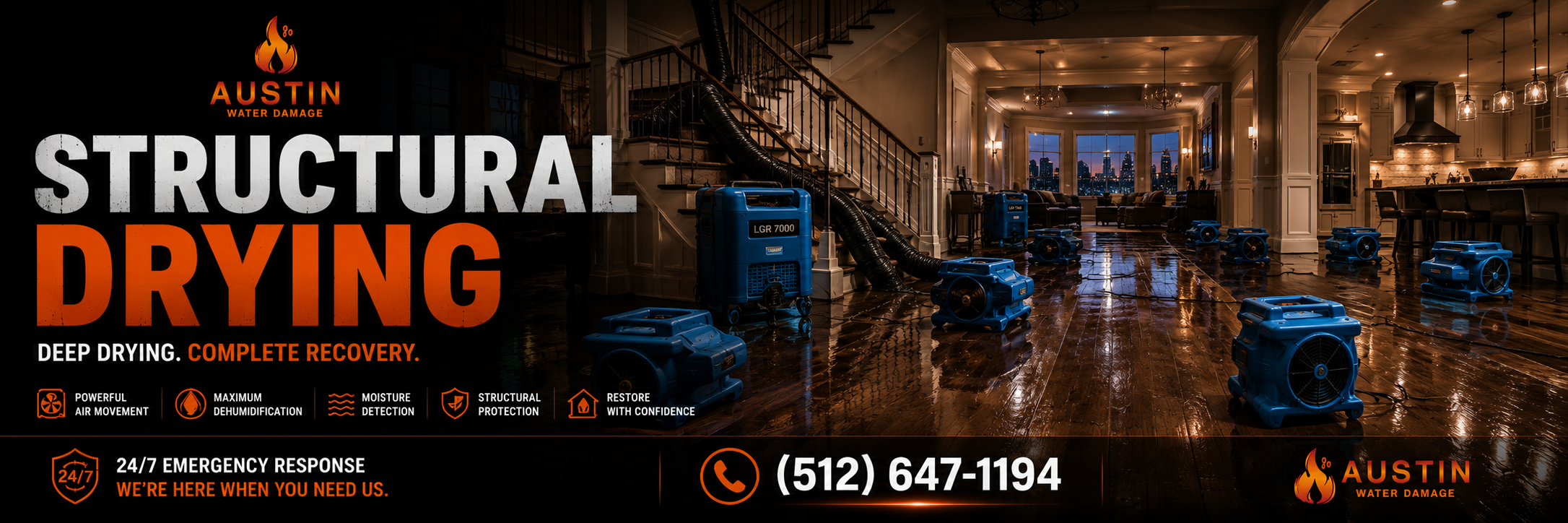
Surface drying no longer guarantees structural drying.
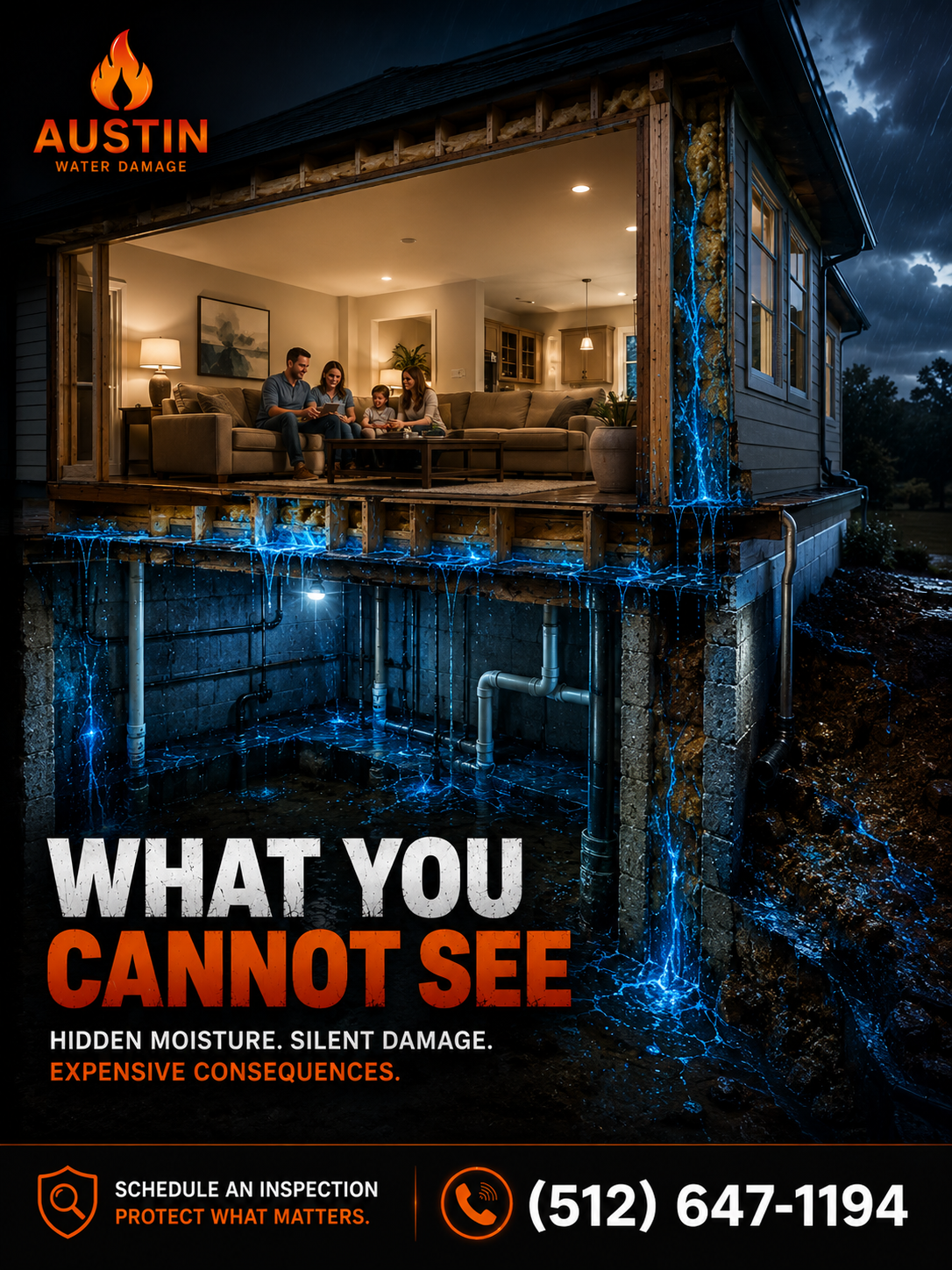
Texas homes increasingly rely on sealed assemblies and interconnected systems that allow humidity and moisture to migrate behind finished surfaces before visible symptoms appear.

Why Texas Water Damage Escalates Faster
Texas combines several environmental risk factors into one operating environment.
Heat Expansion Pressure
Extreme temperatures expand plumbing lines, fittings, and structural materials.
Repeated expansion cycling weakens:
- pipe joints
- supply lines
- attic plumbing
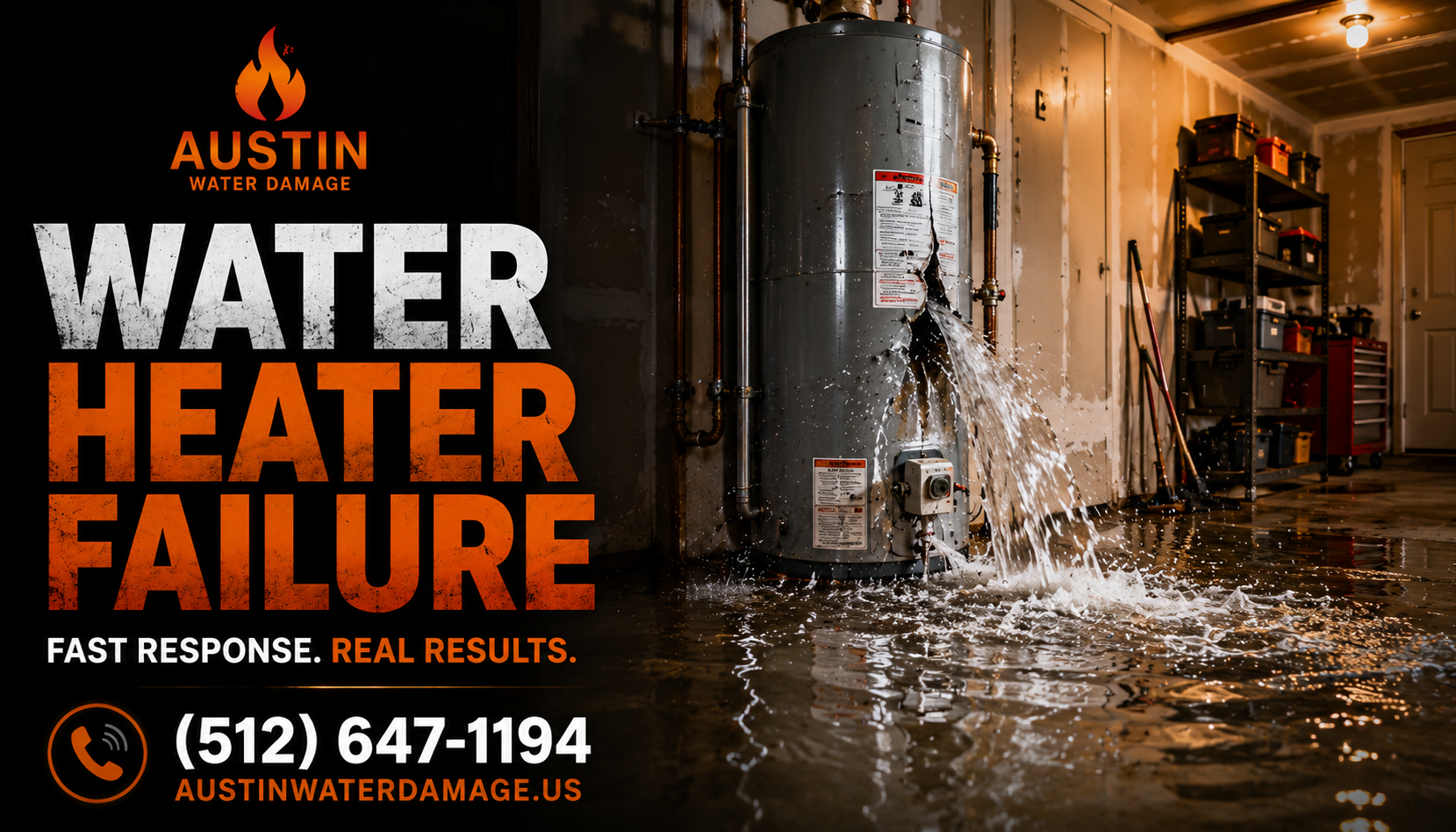
- water heater connections
- foundation penetrations
Small weaknesses become major leak events over time.
Slab Foundation Movement
Large portions of Texas rely on slab-on-grade construction.
When moisture conditions shift beneath foundations:
- slabs move
- plumbing stress increases
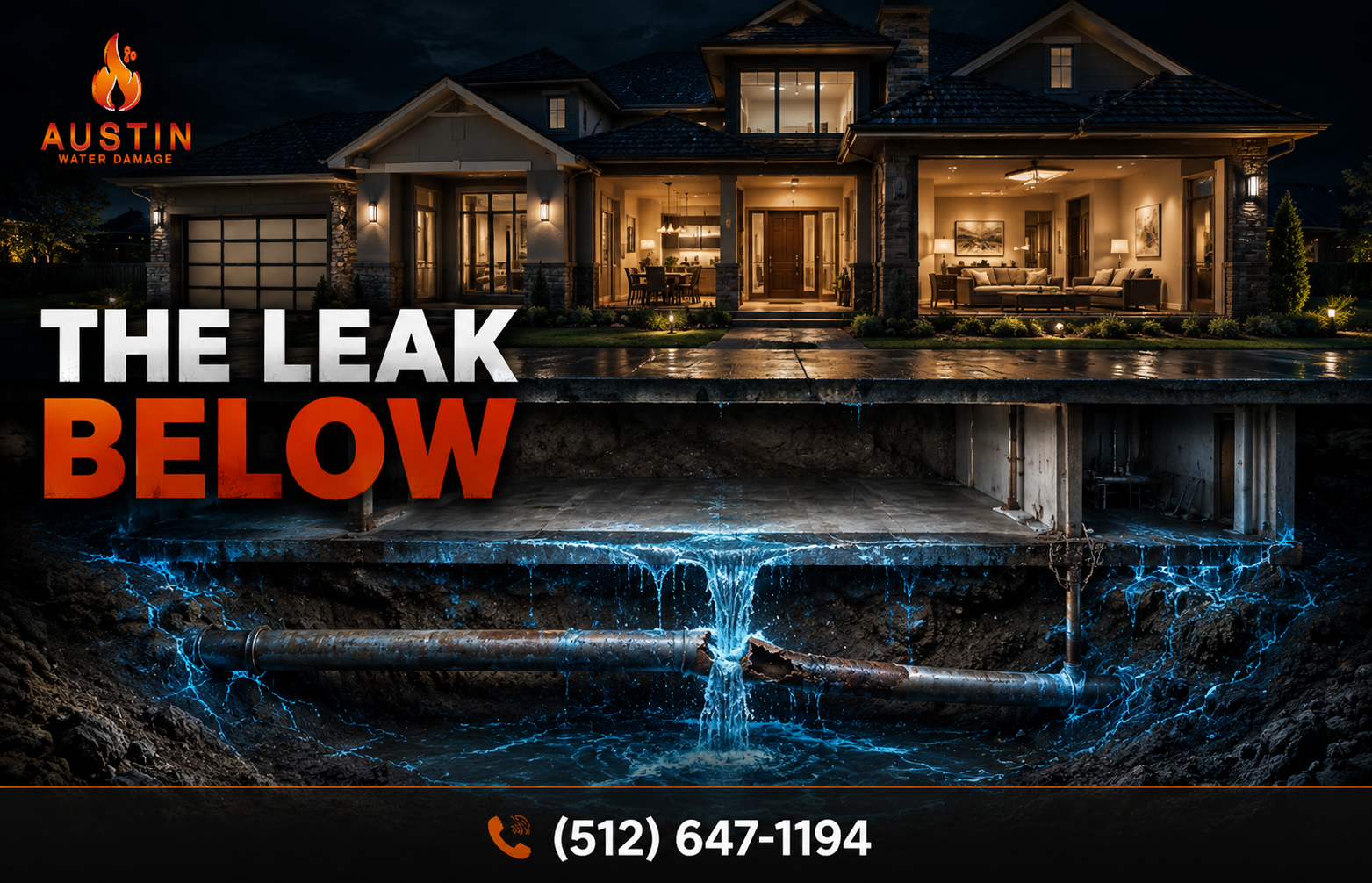
- underground pipe separation develops
- flooring and walls begin showing secondary symptoms
Many Texas water damage events originate below the visible structure.
Humidity Retention & Moisture Saturation
Gulf Coast and Central Texas environments retain moisture aggressively.
Humidity slows evaporation inside:
- insulation
- drywall
- cabinetry
- framing
- crawlspaces
- attic systems
This increases long-term mold and structural deterioration risk after flooding or leaks.
Rapid Growth Infrastructure Stress
Texas expansion creates uneven infrastructure conditions.
Older systems coexist beside rapidly constructed developments.
This produces recurring exposure involving:
- builder-grade plumbing failures
- drainage overload
- pressure inconsistencies
- installation shortcuts
- overloaded municipal systems
Growth pressure changes how restoration must be evaluated across Texas metros.
Water Damage Behaves Differently Across Texas
Austin & Central Texas
Austin properties commonly experience:
- slab leak exposure
- expansive soil movement
- attic moisture migration
- HVAC condensation spread
- foundation stress after heavy rainfall
Hill Country elevation changes also influence runoff behavior and moisture accumulation patterns.
Houston & Gulf Coast Texas
Houston environments operate under continuous humidity pressure.
Common conditions include:
- saturation retention
- storm flooding
- prolonged structural drying timelines
- microbial growth acceleration
- high indoor humidity persistence
Water damage near the Gulf Coast often requires extended dehumidification and containment oversight.
Dallas–Fort Worth
North Texas combines:
- freeze exposure
- rapid development stress
- attic pipe failures
- insulation saturation
- expansion-contraction cycling
Winter events frequently create secondary damage that appears weeks after initial drying.
San Antonio
San Antonio properties often experience:
- aging plumbing infrastructure
- slab movement
- seasonal runoff pressure
- underground pipe stress
- hidden leak progression
Long-term moisture exposure frequently develops beneath flooring systems before discovery.
Commercial Water Damage Across Texas
Commercial buildings experience additional layers of infrastructure pressure.
Texas commercial losses commonly involve:
- hotel flooding
- multifamily saturation
- office HVAC moisture spread
- warehouse roof intrusion
- retail drainage overload
- restaurant plumbing failures
Large facilities contain interconnected systems where water migrates rapidly between zones.
Operational disruption becomes part of the loss event.
This is especially critical in:
- hospitals
- hotels
- retail centers
- industrial facilities
- luxury mixed-use developments
Commercial restoration requires structured containment, documentation, and moisture verification rather than surface cleanup alone.
Structural Drying vs Surface Drying
Texas restoration failures often begin with incomplete drying.
Surfaces may appear stable while moisture remains trapped inside:
- subfloors
- framing cavities
- insulation
- cabinetry
- slab systems
Secondary damage then emerges later through:
- odor
- warping
- microbial growth
- flooring movement
- cabinet distortion
- hidden deterioration
Verification matters more than appearance.
Texas Property Damage Escalation Timeline
0–24 Hours
Water spreads through materials rapidly.
Emergency extraction limits structural migration.
24–48 Hours
Humidity retention increases.
Containment and dehumidification become critical.
3–7 Days
Insulation and framing retain hidden moisture.
Odor and microbial conditions begin forming.
2–4 Weeks
Structural symptoms emerge:
- flooring movement
- cabinet distortion
- subfloor instability
- drywall deterioration
- air quality changes
Escalation often occurs quietly before becoming visible.
Texas Restoration Requires Infrastructure Discipline
Fast response matters.
However, structure matters more.
Effective Texas water damage restoration depends on:
- moisture mapping
- containment strategy
- documentation systems
- verification benchmarks
- environmental adaptation
- accountability after drying
Austin Water Damage approaches restoration through organized infrastructure oversight rather than urgency-based marketing.
Texas Water Damage Decision Intelligence
Water damage is rarely only about water.
Most losses involve:
- environmental pressure
- structural conditions
- hidden migration
- infrastructure stress
- delayed escalation timelines
Texas properties operate under some of the most complex environmental conditions in the country.
Understanding those systems before making restoration decisions reduces long-term risk.
For many homeowners and commercial operators, clarity becomes the first layer of protection.